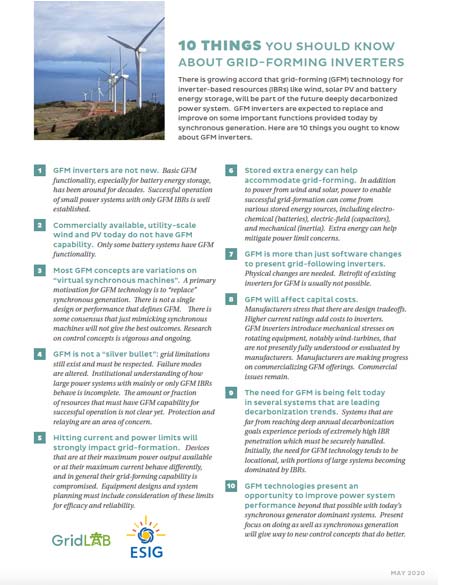

10 things you should know about grid-forming inverters
There is growing accord that grid-forming (GFM) technology for inverter-based resources (IBRs) like wind, solar PV and battery energy storage, will be part of the future deeply decarbonized power system. GFM inverters are expected to replace and improve on some...
Grid modernization playbook report
Over 150 states, local governments and prominent businesses have adopted ambitious renewable and clean energy goals to rapidly reduce carbon emissions in an effort to address climate change and improve the resilience of the electric grid. Concurrently, states and utilities...
NREL Inertia and the Power Grid: A Guide Without the Spin
Inertia in power systems refers to the energy stored in large rotating generators and some industrial motors, which gives them the tendency to remain rotating. This stored energy can be particularly valuable when a large power plant fails, as it...
Regulating voltage: recommendations for smart inverters
Customers are increasingly choosing to deploy distributed energy resources (DER) to better serve their energy needs. This deployment of DER is part of a broader energy transition where the centralized paradigm of energy delivery is evolving to a more distributed...
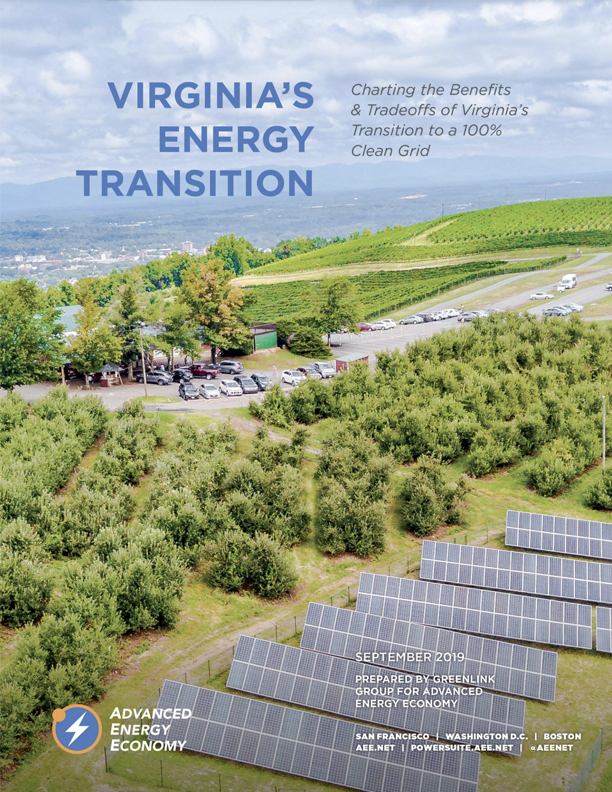
Virginias Energy Transition
Virginia’s Energy Transition explores the impacts of the Commonwealth employing a number of advanced energy resources to build a 100% carbon-free grid. Advanced Energy Economy worked in collaboration with GridLab and the Greenlink Group to map out how Virginia could...
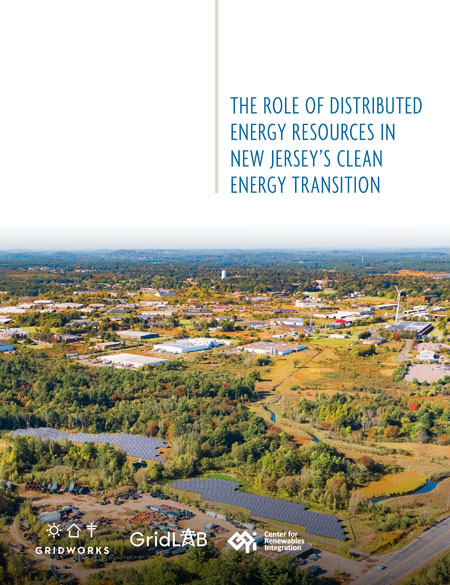
The Role of Distributed Energy Resources in New Jersey’s Clean Energy Transition
Electricity grids across the nation are undergoing a rapid transition. To date the principal contributor to this transition is the increased deployment of utility-scale renewable energy resources, driven in part by declining costs of these resources relative to conventional, fossilfired...


Integrated Distribution Planning: A path Forward
The Tennessee Valley Authority lags behind its peers on clean energy development and has the second-highest planned gas buildout of all major utilities in the United States.1 Its 20-year energy-planning outlook projects the agency will generate 34 million tons of...
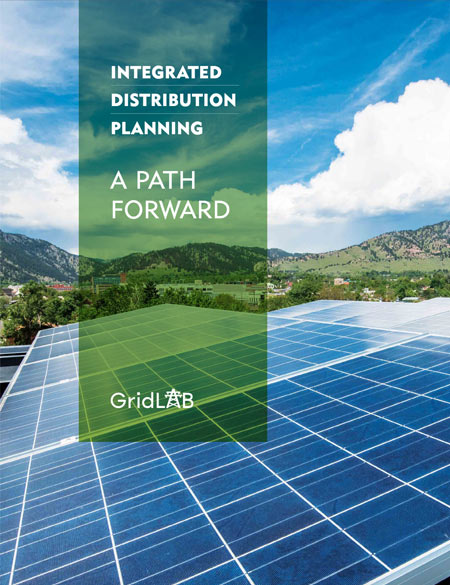
Integrated Distribution Planning: A Path Forward
Electric distribution utilities have successfully designed and operated safe and reliable distribution systems for over 100 years using proven, but not publicly understood, distribution planning practices. As customers increasingly adopt distributed energy resources (DER) such as energy efficiency, demand response,...

Modernizing the grid in the public interest: a guide for virginia stakeholders
Utilities across the world are taking steps to modernize their electric grids. In the most basic sense, this means augmenting the grid with software and communications technologies to help the grid meet the new demands society is placing upon it....

The Role of Distributed Energy Resources in Today’s Grid Transition
Electricity grids across the nation are undergoing a rapid transition. The principal contributor to this transition is the increased deployment of renewable energy resources by utilities, driven in part by declining costs of these resources relative to conventional, fossil-fired resources....