
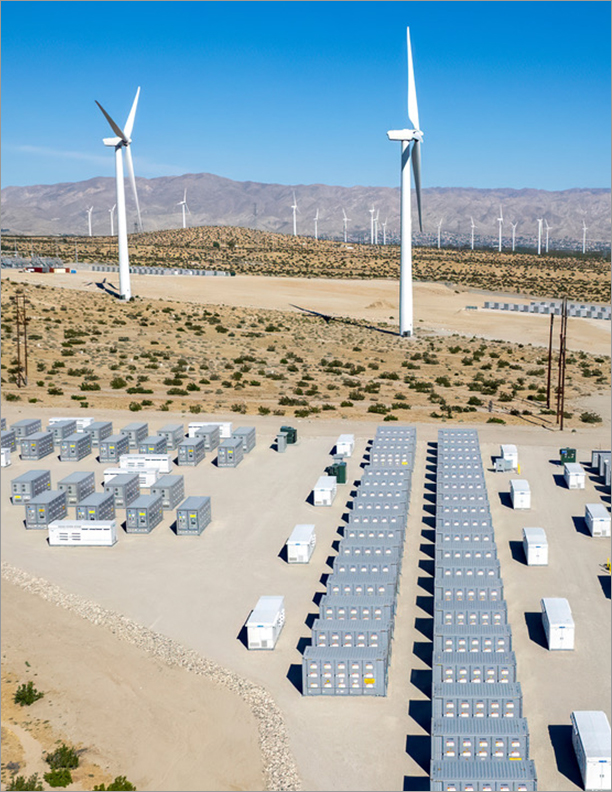
 The growth of Battery Energy Storage Systems (BESS) across the United States has been characterized by a significant geographic imbalance. While California (CAISO) and Texas (ERCOT) have emerged as leaders in storage integration, with ERCOT alone deploying nearly ten times more capacity than all Eastern markets combined, PJM, MISO, and SPP continue to experience significant developmental lag. This disparity is not a reflection of diminished developer interest or technological limitations, but rather a direct result of divergent regulatory frameworks and inadequate market architectures.
Our investigation, detailed in our new report “The Storage Gap: Deployment Challenges in the East“, validates that this lag is primarily attributable to systemic, regulatory, and market design failures. Policy factors, including market design, interconnection processes, procurement practices, and planning methodologies will determine the future of BESS across these regions. While BESS offers a speed-to-power advantage, with modular systems capable of being commissioned within 6 to 12 months, this agility is frequently neutralized by archaic institutional frameworks in the East.
As much of the East Coast remains covered in ice and snow this month and experiencing frigid temperatures, no energy source should be left on the table. As of 2024, U.S. utility-scale battery storage capacity exceeded approximately 23 GW, with deployment heavily concentrated in CAISO and ERCOT, while regions such as PJM, MISO, SPP, NYISO, ISO-NE, and the Southeast had substantially lower operational storage levels. By 2025, CAISO had roughly 12–13 GW of installed battery storage and ERCOT approximately 8–9 GW, resources that have played an increasing role in peak demand management and reliability support, including reducing the need for emergency conservation measures. Nearly half the country’s grid is not benefiting from the reliability and affordability of battery storage deployed at scale.
Market Design Challenges
The economic foundation of utility-scale storage relies on revenue stacking: the ability to monetize energy arbitrage, capacity value, and ancillary services simultaneously. However, current market designs in the East often underestimate or obscure this value through restrictive rules that fail to reflect the true costs and system benefits of batteries.
In the early phases of deployment, ancillary services typically dominate the revenue stack. Yet, many Eastern RTOs maintain restrictions on dynamic cost offers, preventing BESS from adjusting bids to reflect sub-hourly opportunity costs. Furthermore, pricing mechanisms for ramping products often ignore “lumpy” costs, such as start-up expenses, leading to $0/MWh price signals that fundamentally understate the value BESS provides to the system.
Capacity and resource adequacy are critical for long-term project viability, yet they are currently plagued by a lack of transparency and frequent methodological changes. Current capacity accreditation methods often include energy limits while ignoring vital flexibility parameters like ramp rates and start-up times.
Interconnection and Modeling Bottlenecks
To bridge this deployment gap, Eastern markets must modernize their planning and accreditation frameworks. Current capacity valuation often understates the reliability benefits of storage, particularly during extreme weather events where battery performance has historically exceeded that of conventional thermal fleets. Transitioning to sub-hourly modeling and adopting flexible procurement structures that reward dispatch precision will be essential. Until the regulatory environment in the East evolves to recognize the full operational value of storage, the region will continue to miss critical opportunities to enhance grid reliability and decarbonization.
Key takeaways from GridLab’s report are:
- The lagging deployment in Eastern markets is a consequence of systemic market design failures rather than a lack of technological viability.
- Markets must transition to dynamic offers, look-ahead dispatch, and cost-reflective reserve bids to ensure storage is compensated for its unique agility.
- Improving ramping and ancillary service price formation, alongside advancing nodal reserve pricing, will provide clearer economic signals for developers.
- Transitioning from static blanket duration rules toward “slice-of-day” accreditation will more accurately reflect how storage supports the grid across different timeframes.
- Strengthening capacity markets with predictable, performance-based accreditation and moving toward long-term agreements will provide the certainty needed to reach financial close.
- Shifting from reactive study processes to proactive planning focused on deliverability can help reduce speculative queue volumes and accelerate deployment.